How Solar Technology Can Help Businesses Reduce Energy Costs, Improve Energy Independence & Build a More Sustainable Future
As businesses continue to face rising energy demands, increasing operating costs, and growing expectations for sustainable practices, energy management has become a strategic priority—not just an operational concern.
For corporate offices, factories, hospitals, warehouses, shopping complexes, hotels, and other commercial facilities, solar energy is becoming an increasingly important part of the modern energy strategy.
Solar technology has also evolved significantly. Today's systems are no longer limited to basic solar panels. Modern solutions can combine high-efficiency photovoltaic modules, intelligent inverters, battery storage, smart monitoring, and energy-management technologies to create a more efficient and controllable energy ecosystem.
Why Is Solar Energy Important for Businesses?
For many organizations, electricity represents a significant and recurring operating expense. Solar energy provides an opportunity to generate a portion of that electricity directly from the available rooftop or facility space.
💰 Reduce Long-Term Energy Costs
A properly designed solar installation can generate electricity during daylight hours, potentially reducing the amount of electricity a business needs to purchase from the grid.
For organizations operating large facilities with significant daytime electricity consumption, this can make rooftop solar particularly attractive.
⚡ Improve Energy Independence
Businesses depend on reliable electricity to keep their operations running.
Solar generation, combined with appropriate backup and energy-storage solutions, can help organizations diversify their energy sources and reduce their dependence on a single source of electricity.
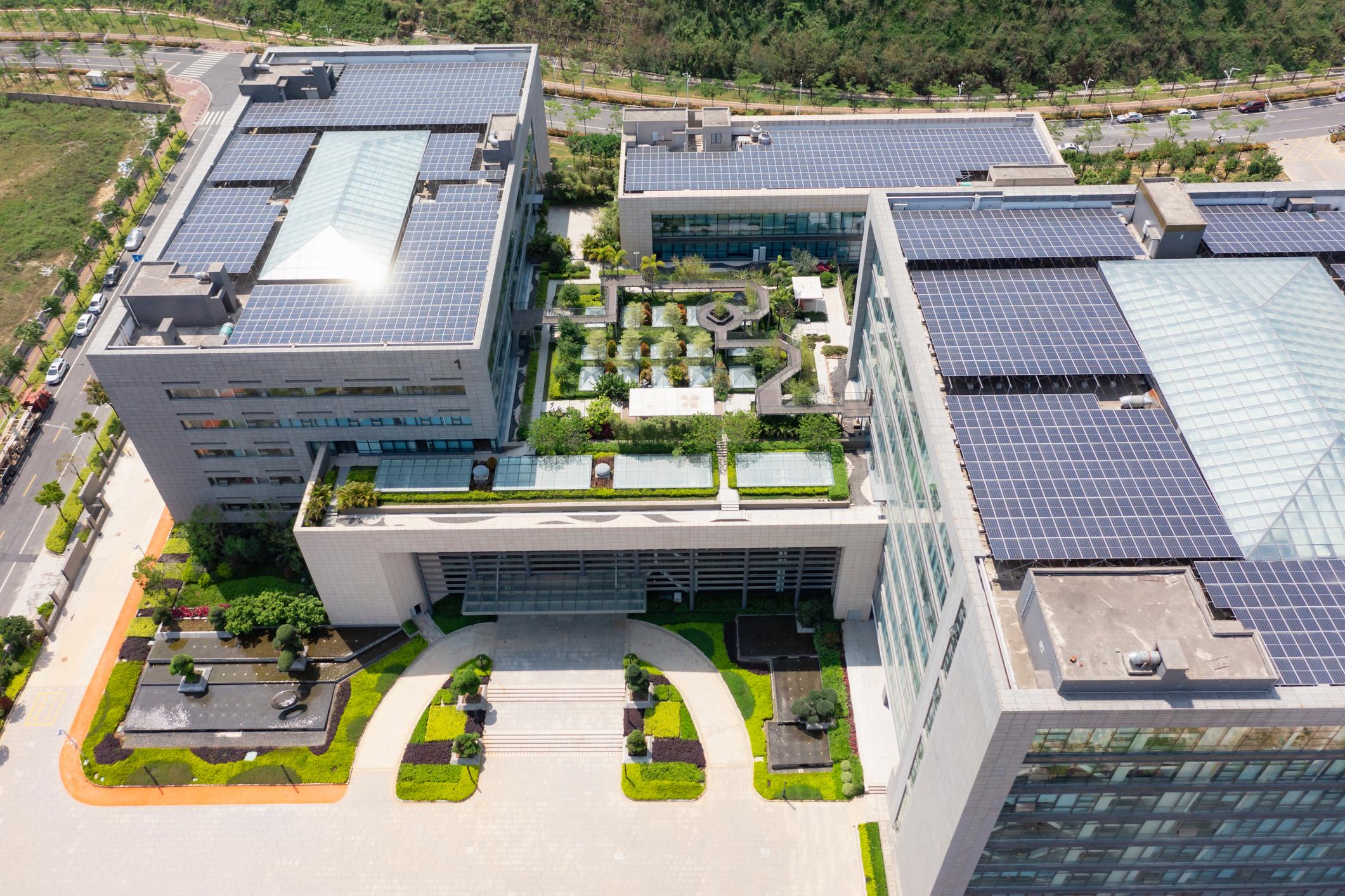
🏢 Turn Unused Rooftop Space into an Asset
Large commercial and industrial buildings often have substantial rooftop areas that remain underutilized.
Solar panels can transform these spaces into productive energy-generating assets without requiring additional land.
🌱 Support Corporate Sustainability
Businesses are increasingly incorporating sustainability into their corporate strategies.
Generating renewable electricity can help organizations reduce their dependence on conventional energy sources while supporting broader environmental and sustainability objectives.
Solar Technology Is Getting Smarter
The solar industry is rapidly evolving. Modern photovoltaic systems are focusing not only on generating more electricity, but also on improving efficiency, monitoring, reliability, and energy management.
01 — Higher-Efficiency Solar Cells
Technologies such as TOPCon, HJT (Heterojunction Technology), and Back-Contact (BC) are helping manufacturers push solar-module efficiency higher.
For businesses with limited rooftop space, higher-efficiency modules can be especially valuable because more electricity can potentially be generated from the same available area.
02 — Solar + Battery Storage
Solar generation is naturally dependent on sunlight. Battery energy-storage systems can store excess electricity generated during the day and make it available when required.
For businesses, combining:
Solar Panels → Inverter → Battery Storage → Energy Management
can create a more flexible energy system.
Battery storage can also help businesses better manage energy consumption and, depending on the system design and local electricity structure, reduce reliance on grid electricity during selected periods.
03 — Smart Monitoring & Energy Management
Modern solar systems can provide detailed information about system performance.
Businesses can monitor:
- ☀️ Solar generation
- ⚡ Energy consumption
- 🔋 Battery status
- 📊 System performance
- 🚨 Potential system issues
- 📈 Historical energy data
This information can help facility and energy managers understand how their energy system is performing and identify opportunities for better energy management.
04 — AI & Predictive Maintenance
Artificial intelligence and advanced analytics are increasingly being introduced into energy-management and solar-monitoring systems.
These technologies can help identify unusual performance patterns, detect potential problems, and support predictive maintenance.
The result is a shift from simply generating solar power to actively managing an intelligent energy system.
Where Can Corporate Solar Be Used?
Solar technology can be considered across a wide range of business environments.
Corporate Offices
Reduce daytime electricity requirements for lighting, computers, air conditioning, networking equipment and other office infrastructure.
Manufacturing Facilities
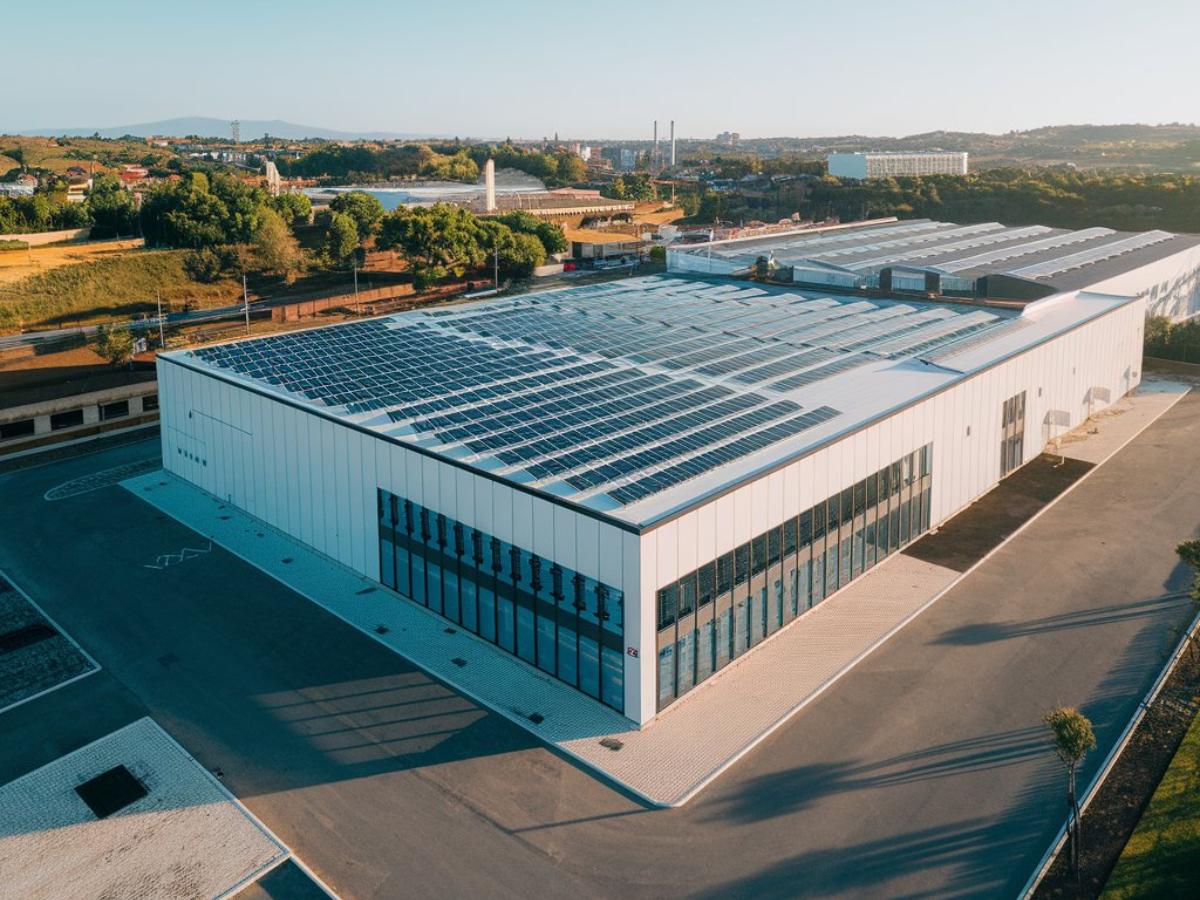
Large industrial facilities can benefit from utilizing extensive rooftop areas to support high daytime energy consumption.
Hospitals & Healthcare Facilities
Solar can become part of a broader energy strategy for facilities that require continuous and reliable power.
Warehouses & Distribution Centers
Large rooftops and daytime operations can create suitable conditions for rooftop solar installations.
Hotels & Commercial Buildings
Solar generation can support energy-intensive systems such as air conditioning, lighting, water heating and other building services.
🛒 Shopping & Retail Facilities
Commercial buildings can explore solar generation as part of their long-term energy-cost management strategy.
What Does This Mean for Businesses in Bangladesh?
For businesses in Bangladesh, rooftop solar can be particularly relevant because many commercial and industrial facilities have significant electricity consumption and usable rooftop areas.
Rather than treating solar as simply another electrical installation, businesses can approach it as a long-term energy investment.
A proper assessment should consider:
Current Energy Consumption
How much electricity does the facility use every month?
Peak Demand
When does the business consume the most electricity?
Available Rooftop Area
How much usable space is available for solar modules?
System Capacity
How large should the solar installation be based on the facility's requirements?
Battery Requirement
Is energy storage necessary for the intended application?
Return on Investment
How does the initial investment compare with expected long-term energy savings?
From Solar Panels to a Complete Energy Ecosystem
The future of corporate solar is not simply about installing panels on a roof.
A modern energy ecosystem can combine:
Solar Panels
Generate renewable electricity from sunlight.
↓
Smart Inverter
Converts and manages the electricity produced by the solar system.
↓
Battery Storage
Stores available energy for later use when required.
↓
Monitoring System
Provides real-time information about generation, consumption and system performance.
↓
Intelligent Energy Management
Uses data and automation to optimize how energy is generated, stored and consumed.
↓
Smarter Business Operations
Better visibility, improved energy management and greater control over energy usage.
The Future Is More Than Solar
The next generation of corporate energy management will increasingly combine solar generation, battery storage, smart inverters, digital monitoring, automation and intelligent analytics.
This means businesses can move from simply consuming electricity to actively managing how electricity is generated, stored and used.
For organizations planning long-term infrastructure investments, this shift presents an opportunity to rethink energy not only as an operating cost, but also as an area for innovation and efficiency.
🚀 Is Your Business Ready for the Solar Future?
The right solar solution depends on the individual requirements of each organization.
Before making an investment, businesses should evaluate their electricity consumption, facility design, rooftop availability, operating schedule, backup requirements, and long-term energy objectives.
The first step is understanding your energy needs.
At Revolution Technology BD, we believe technology should help businesses become more efficient, connected and future-ready.
From computing and networking solutions to emerging energy technologies, our goal is to help businesses identify the right technology for their evolving requirements.
Power Your Business.
Build a Smarter Future.
Revolution Technology BD
Technology for Today. Solutions for Tomorrow.
Key Takeaway
Solar energy is no longer just an alternative power source. For modern businesses, it can become an important part of a smarter, more sustainable and more resilient energy strategy.
As technology continues to improve, the opportunity is not simply to install solar panels—but to build a smarter energy ecosystem for the future